
France Riots Erupt: Civil Unrest Grips Major Cities
Widespread anti-government protests have sparked severe civil unrest across France. Rioters are setting fire to public buildings, challenging President Macron’s call for calm.
Blog Feature 3998488515
**France Plunged into Civil Unrest as Anti-Government Protests Erupt**
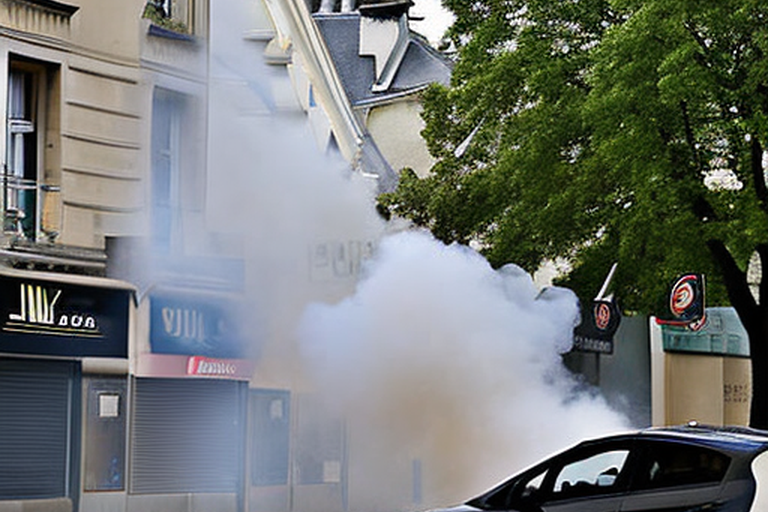
France is experiencing widespread civil unrest and rioting following escalating anti-government protests, leaving multiple major cities grappling with scenes of property damage and violence. Authorities are currently mobilizing forces across the country as tensions mount between protestors and state security forces.
The unrest began as organized demonstrations against government policy but quickly devolved into spontaneous rioting, fueled by deep political dissatisfaction. The situation reached a dramatic peak in cities like Limoges, where rioters reportedly set fire to several public buildings and infrastructure.
President Emmanuel Macron has repeatedly called for calm, urging citizens to remain peaceful and stressing the need for national stability. In a televised address, Macron stated that the government was committed to restoring order while adhering to the rule of law.
The protests, which involve diverse groups of citizens, are primarily fueled by economic grievances and frustration over perceived governmental neglect. Critics argue that the current social and economic policies have disproportionately affected working-class communities and rural areas.
Security forces responded to the escalating violence by deploying specialized units and implementing heightened curfews in affected metropolitan areas. These efforts have created a volatile operational environment, demanding continuous coordination between police, military, and local government officials.
“The scale of the discontent suggests that the underlying issues are systemic, not merely reactive,” stated Dr. Sylvie Dubois, a political sociologist at the Sorbonne University. “This unrest is a highly visible symptom of a deep disconnect between the populace and the political establishment.”
The violence has prompted international concern, drawing attention to the fragility of democratic stability in major European economies. Governments worldwide are closely monitoring the unfolding events, anticipating potential ripple effects across the continent.
Local police commanders have described the challenge as unprecedented in recent years, citing the coordinated nature of the unrest. “We are facing highly volatile crowds who are unpredictable,” said a senior police official speaking on condition of anonymity. “The priority remains protecting public safety and minimizing civilian casualties.”
As the government attempts to regain control and restore normalcy, the focus remains on de-escalation and political dialogue. Experts suggest that the immediate future hinges on whether Macron’s administration can address the core grievances driving the protests.
The international community is now watching to see if a decisive governmental response, coupled with tangible policy reforms, can quell the fervor. Failure to address the root causes of the anger risks prolonging the period of instability, transforming localized riots into a sustained national crisis.