
Migrant Crisis: Thousands Cross into Ceuta, Spain Deploys Military
Thousands of migrants have crossed into the Spanish enclave of Ceuta from Morocco, prompting a military response. Concerns over border security and humanitarian crises are growing.
Blog Feature 3204076079
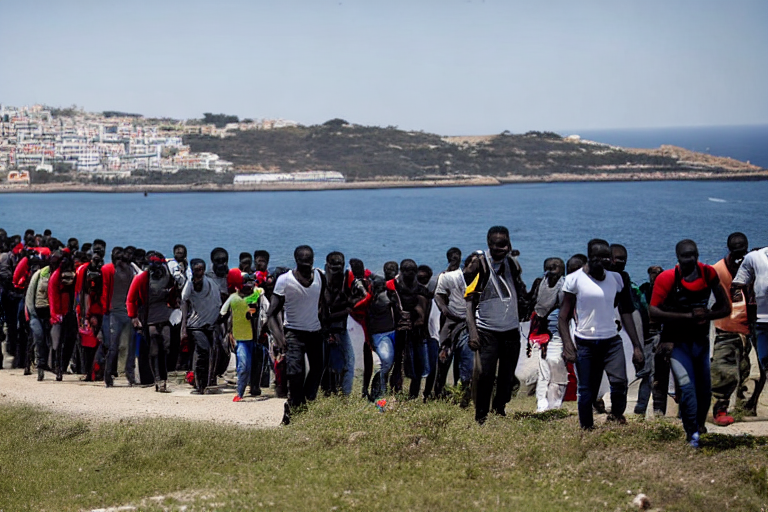
Thousands of migrants surge into Ceuta from Morocco, prompting Spain to deploy military forces
Ceuta, Spain – Thousands of migrants crossed into the Spanish enclave of Ceuta from Morocco on Tuesday, prompting the Spanish government to deploy military forces to manage the situation. The sudden influx has raised concerns about border security and the potential for humanitarian crises in one of Europe’s most sensitive regions.
According to eyewitnesses, the migrants began arriving at dawn, many of them fleeing poverty, conflict, or persecution in their home countries. “We’ve seen a massive increase in arrivals over the past 24 hours,” said Maria Rodriguez, a spokesperson for the Spanish Red Cross, which is providing aid to those arriving on Spanish soil.
Ceuta, a small Spanish territory located on the north coast of Africa, has long been a transit point for migrants seeking to reach Europe. The enclave’s proximity to Morocco and its relatively open borders have made it an attractive route for those fleeing conflict or persecution in countries such as Syria, Afghanistan, and Iraq.
The sudden surge in arrivals caught authorities off guard, with many migrants reportedly making their way into the city undetected. “We’re working around the clock to process these individuals and provide them with necessary assistance,” said Rodriguez. “However, we are concerned about the sheer numbers arriving and the potential strain on our resources.”
As of Tuesday evening, Spanish officials reported that over 5,000 migrants had arrived in Ceuta since dawn, with many more believed to be attempting to cross. The military has been deployed to assist in managing the situation, with soldiers working alongside border police to process arrivals.
“We are doing everything we can to ensure public safety and maintain order,” said a spokesperson for Spain’s Ministry of Defense. “However, it’s clear that this situation requires a more comprehensive response from both the Spanish and Moroccan governments.”
The influx has raised concerns about European border security, with some critics accusing Madrid of failing to adequately address the crisis. Others have warned that the surge could exacerbate tensions between Spain and Morocco.
“This is not just a humanitarian issue, but also a question of national sovereignty,” said Santiago Abascal, leader of the far-right Vox party in Spain. “We need to take a firm stance on border security and ensure that our borders are protected.”
The Spanish government has yet to comment on Abascal’s remarks, but officials have vowed to work closely with their Moroccan counterparts to address the crisis. As the situation continues to unfold, one thing is clear: Ceuta’s porous borders will remain a pressing concern for European policymakers in the days and weeks ahead.
For now, aid workers and authorities are focused on providing assistance to those arriving in Ceuta. “We’re doing everything we can to help these people, but it’s clear that more needs to be done,” said Rodriguez, echoing concerns shared by many of her colleagues.