
Fauci Hearing Sparks ‘Chilling Effect’ on Public Health
Health experts warn that Senate scrutiny may stifle scientific research and public health efforts.
Blog Feature 3913612324
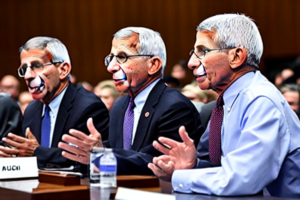
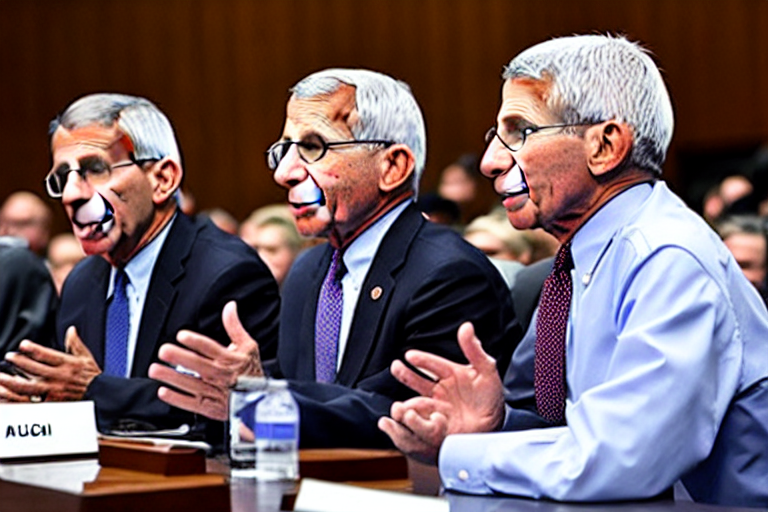
Dr. Anthony Fauci, Director of the National Institute of Allergy and Infectious Diseases (NIAID), testified before a Senate committee on Tuesday, sparking concerns among health experts that politics is increasingly encroaching on scientific research.
The hearing, which focused on the Trump administration’s handling of the COVID-19 pandemic, featured heated exchanges between Fauci and Republican senators who questioned his testimony. While Fauci maintained his composure throughout the proceedings, some observers worry that such public scrutiny could have a “chilling effect” on scientists’ willingness to speak candidly about their research.
“This is exactly what we’ve been warning about,” said Dr. Mary Bassett, Director of the FXB Center for Health and Human Rights at Harvard University. “When politicians start questioning the credibility of scientists, it can create an environment where researchers feel pressured to conform to a particular narrative or ideology.”
Fauci’s testimony was just the latest example of a trend that has been gaining momentum in recent months: politicians increasingly scrutinizing scientists and their research. From climate change to vaccine safety, policymakers are inserting themselves into scientific debates, often with little understanding of the underlying evidence.
The implications of this trend are far-reaching, say experts. “When politics supersedes science, it erodes trust in institutions and can undermine public health efforts,” said Dr. Peter Hotez, Dean of the National School of Tropical Medicine at Baylor College of Medicine. “It’s a slippery slope that can have serious consequences for our ability to respond to emerging health threats.”
The politicization of science is not limited to the COVID-19 pandemic. In recent years, lawmakers have taken aim at climate change research, questioning the validity of studies on human-caused global warming and attempting to block funding for related initiatives.
As the US prepares to enter a new era of politics, health experts are bracing themselves for more confrontations between science and policy. “We’re seeing a growing polarization around scientific issues, which is concerning,” said Dr. Bassett. “It’s not just about COVID-19 – it’s about the broader implications for public health.”
With the 2024 presidential election on the horizon, experts predict that the intersection of politics and public health will only become more contentious. As Fauci’s Senate hearing made clear, the lines between science and policy are becoming increasingly blurred.
In response to growing concerns about the politicization of science, some advocacy groups are pushing for greater transparency and accountability in research funding and policy-making. “We need to ensure that scientists have the freedom to pursue their research without fear of reprisal or political interference,” said Dr. Hotez.