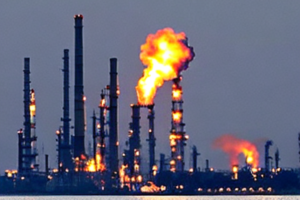

Red Sea Conflict Threatens Global Oil Flow and Energy Stability
Geopolitical tensions, driven by Houthi attacks and potential shutdowns, severely restrict global oil flow. Experts warn that energy supply chains face a critical threat, making infrastructure security paramount.
Blog Feature 744863880
Geopolitical tensions in the Red Sea and Saudi Arabia’s intermittent restrictions on major oil pipelines have severely limited global oil flow, threatening international energy supply chains. This volatile situation underscores the critical vulnerability of modern energy infrastructure to both state-sponsored and non-state militant attacks.
Houthi militants have intensified attacks on shipping and infrastructure throughout the Red Sea, while escalating regional conflict has prompted Saudi Arabia to demonstrate the ability to shut down or severely restrict key oil export pipelines. The resulting disruption directly impacts global oil supply, sending immediate shockwaves through energy markets worldwide and raising deep concerns among industry analysts.
The confluence of these threats transforms energy transit points into high-risk zones. Experts warn that the global economy remains acutely sensitive to supply shocks, making the resilience of critical chokepoints paramount. The instability forces international shipping and energy companies to rely heavily on sophisticated monitoring systems.
To counter the threat, energy security efforts are increasingly adopting advanced surveillance technology. Satellite monitoring, drone surveillance, and autonomous industrial control systems are being deployed to protect pipelines and commercial shipping lanes. These technologies are designed to detect unauthorized activity and mitigate physical sabotage in real-time.
However, the sheer sophistication and geographical scale of the threats challenge current defensive capabilities. “The vulnerability is no longer just physical; it is systemic,” stated Dr. Anya Sharma, a geopolitical energy analyst at the Carnegie Endowment. “A single point of failure, whether it is a pipeline valve or a maritime choke point, can have exponential economic consequences.”
The potential for further escalation looms large, creating uncertainty that ripples across commodity pricing. Increased reliance on these fragile infrastructure assets means that the failure of any major energy artery could trigger a global recession.
“We are seeing a rapid acceleration in the militarization of civilian infrastructure,” noted Captain Marcus Thorne, a maritime security consultant. “The focus has shifted from mere patrols to preemptive, technological defense, making the gap between threat and detection incredibly narrow.”
For global economies, the immediate challenge is diversifying energy sources and routes while fortifying existing infrastructure. The escalating conflict serves as a stark, costly reminder that modern energy security is inextricably linked to advanced technology, international stability, and the complex calculus of geopolitics.