
Lake Powell Hits Record Low: Water Crisis Looms in Southwest
Record low water levels at Lake Powell raise concerns about the region’s water supply and power generation capabilities.
Blog Feature 3336002162
LAKE POWELL REACHES RECORD LOW WATER LEVEL, RAISING CONCERNS FOR SOUTHWEST REGION’S WATER SUPPLY
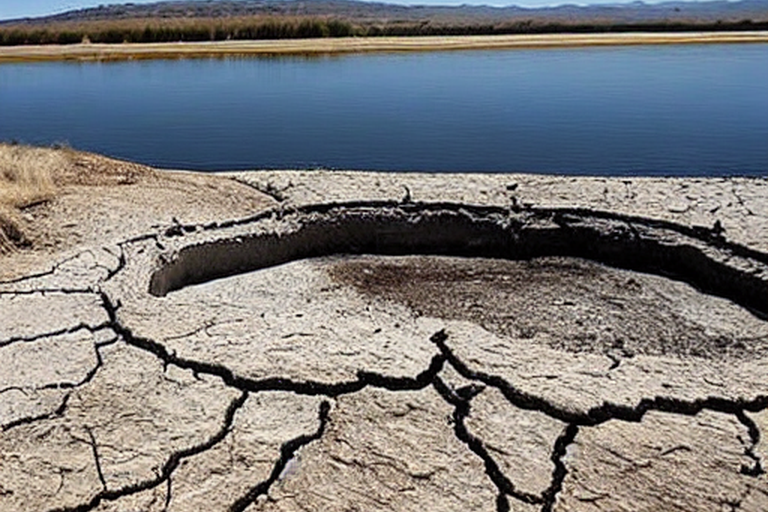
Lake Powell, the second-largest reservoir in the United States, has hit a record low water level, sparking concerns for the Southwest region’s water supply and potential impacts on hydroelectric power generation. The reservoir’s water level dropped to 3,555 feet, its lowest point since it was filled in the 1960s, according to data from the Bureau of Reclamation.
This development is significant because Lake Powell serves as a vital storage facility for Colorado River water, which supplies irrigation and drinking water to millions of people across Arizona, California, Nevada, New Mexico, and Utah. “The low water level at Lake Powell is a clear indication that we need to rethink our approach to managing the Colorado River Basin,” said Anne Castle, a senior fellow at the University of Colorado’s Getches-Wilkinson Center for Natural Resources, Energy, and the Environment.
The Glen Canyon Dam, which impounds Lake Powell, is also facing challenges due to the low water levels. The dam generates hydroelectric power, but its capacity to do so will be impacted if the reservoir continues to drop. “If we lose too much water at Lake Powell, it’s going to be a big problem for our ability to generate electricity,” said John Entsminger, general manager of the Southern Nevada Water Authority.
The low water level is attributed to a combination of factors, including drought and increased water usage in the Southwest region. The region has experienced several years of below-average rainfall, exacerbating the situation. Additionally, the growing demand for water from agriculture, industry, and municipalities has put pressure on the Colorado River Basin’s limited resources.
The Bureau of Reclamation is closely monitoring the reservoir’s water level and working with stakeholders to develop a plan to address the issue. However, some experts warn that the situation may be irreversible without significant changes in water management practices. “We’re not just talking about a shortage; we’re talking about a fundamental shift in how we manage our water resources,” said Castle.
The impact of Lake Powell’s record low water level will likely be felt far beyond the Southwest region, with potential effects on agriculture, industry, and municipalities across North America. As the situation unfolds, one thing is clear: the management of this vital reservoir will require a collaborative effort from governments, stakeholders, and experts to ensure its continued health and functionality.
The Bureau of Reclamation has scheduled a meeting for later this month to discuss the implications of Lake Powell’s low water level and potential solutions. In the meantime, residents and businesses in the region are bracing themselves for the consequences of this unprecedented event. As Entsminger noted, “This is uncharted territory, and we need to work together to find a way forward.”