
Spacecraft Reaches Mercury: Humanity’s Best View of Inner Solar System
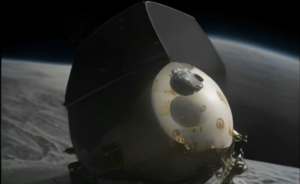
After an eight-year journey, a spacecraft has arrived at Mercury, offering unprecedented views of the mysterious inner planet. This data promises to revolutionize our understanding of solar system formation and geology.
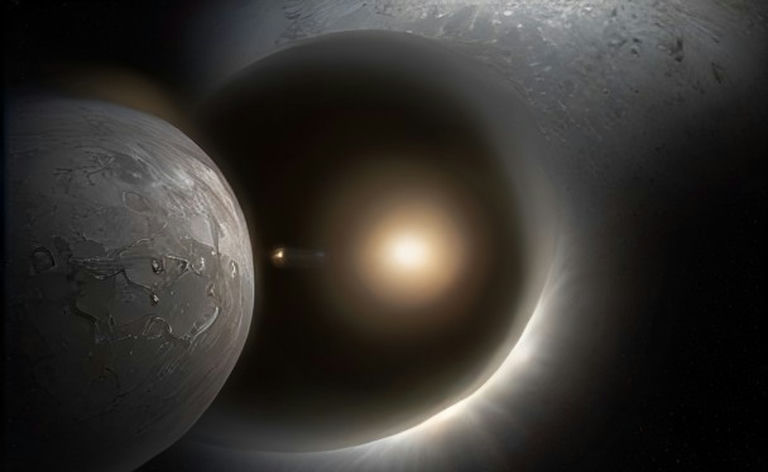
A specialized spacecraft has arrived at Mercury, the smallest and innermost planet of the solar system, concluding an arduous eight-year voyage. The historic mission promises to deliver humanity with the most comprehensive geological view of the mysterious world, dramatically advancing scientific understanding of the inner solar system’s formation.
Mercury, which orbits closer to the Sun than any other planet, has long intrigued scientists due to its extreme conditions and mysterious geological makeup. It is significantly smaller than Earth and possesses a heavily cratered surface, suggesting a violent past and unique thermal dynamics. The mission’s primary objective is to collect unprecedented data on the planet’s composition, crustal structure, and thermal history.
The journey to Mercury required precise navigation and sustained engineering over eight years, making the spacecraft’s arrival a monumental achievement for space exploration. Mission control teams have been meticulously preparing for the data downlink, which represents the culmination of years of planning and interplanetary travel.
“This is not just an arrival; it is a scientific doorway,” stated Dr. Elaine Rodriguez, a lead astrophysicist on the mission team. “We have spent decades theorizing about Mercury’s interior, but the data we are about to receive will move us from theory into tangible reality.”
The spacecraft is equipped with advanced instruments designed to analyze the planet’s surface materials and measure localized gravitational anomalies. Researchers are particularly interested in understanding how Mercury retained its core and atmosphere despite its proximity to the Sun.
The gathered information is expected to shed critical light on planetary differentiation—the process by which early worlds separated into distinct layers of material. Planetary scientists believe that the data will refine models of the solar system’s initial formation and help explain why Mercury is geologically unique among the terrestrial planets.
“Mercury acts as a time capsule,” commented Professor Kenji Ito, a planetary geophysicist at the Jet Propulsion Laboratory. “By studying its crust and core, we gain fundamental insights into the physics of planetary bodies that are otherwise impossible to observe.”
The mission’s next phase involves a sustained period of orbital observation and data gathering. Scientists anticipate that the initial data streams will provide detailed maps of tectonic activity and volcanic history, offering clues about Mercury’s internal heat source.
The gathered information will be processed and analyzed by global teams of researchers, promising a new era of planetary science. The comprehensive data set is expected to inform the design and execution of future deep-space missions, solidifying Mercury’s status as a vital proving ground for humanity’s continued expansion into the solar system.