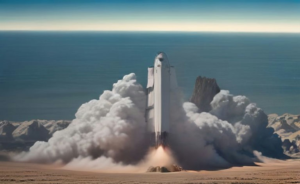
SpaceX Recaptures Starship Top Stage, Milestone for Reusable Spaceflight
SpaceX successfully executed a complex recovery of the massive Starship top stage mid-air. This feat validates the hardware necessary for routine, fully reusable heavy-lift space travel.

**SpaceX Successfully Recaptures Top Stage of Starship Rocket, Marking Major Reusability Milestone**
SpaceX successfully executed a complex technical maneuver by recovering the top stage of its massive Starship rocket using specialized mechanical arms. This achievement, which occurred during recent testing, demonstrates a critical capability: the ability to catch and secure a rapidly moving, multi-ton rocket section mid-air.
The successful capture marks a crucial leap toward making fully reusable, heavy-lift space travel a routine commercial reality. This highly complex feat validates the operational reliability of the Starship system, addressing key logistical challenges inherent in modern spaceflight.
The test involved the recovery of the Starship upper stage, which was maneuvering after a simulated mission segment. To achieve the interception, SpaceX utilized large, specialized mechanical arms, internally nicknamed “chopsticks.” These arms were designed to physically intercept and stabilize the rocket section, bringing it safely back to the ground facility.
The recovery operation is considered a major engineering breakthrough because it proves the system’s capacity to handle a massive, high-velocity piece of hardware multiple times. Currently, the industry standard for heavy-lift vehicles involves discarding upper stages, leading to significant operational costs and waste.
“This isn’t just about catching a rocket; it’s about proving a repeatable, cost-effective process for handling the entire vehicle,” said Dr. Elaine Ramirez, a propulsion systems analyst consulting on aerospace infrastructure. “The successful recovery dramatically alters the economic model for accessing orbit.”
Developing a fully reusable system requires solving intricate problems related to materials science, thermal management, and mechanical capture. The recovery mechanism must function reliably under extreme stress, from the heat of reentry to the structural stresses of a rapid interception.
The successful test confirms that the physical architecture required for rapid refurbishment and reuse is viable. SpaceX’s goal is to minimize the turnaround time and cost associated with launching massive payloads into space.
“Every single test like this removes a massive layer of technical uncertainty,” stated industry veteran James Chen, who specializes in launch vehicle logistics. “The combination of deep-space reliability and ground-level mechanical precision is what defines this generation of space transportation.”
While the company has yet to schedule a commercial mission utilizing this specific recovery profile, the milestone significantly de-risks future operations. The next steps for SpaceX involve integrating this recovery capability into increasingly complex, full-stack end-to-end flight tests.
The overall aim remains the establishment of a routine, high-cadence launch service capable of transporting large volumes of cargo and crew to destinations beyond Earth orbit. This successful capture positions the reusable rocket system as a dominant contender in the rapidly evolving global space sector.