

Mass Protests Erupt in France Amid Rising European Tension
Mass demonstrations in France drew hundreds of thousands, escalating into violent clashes with authorities. This unrest reflects deep-seated political dissatisfaction sweeping across the European continent.
Blog Feature 3849037006
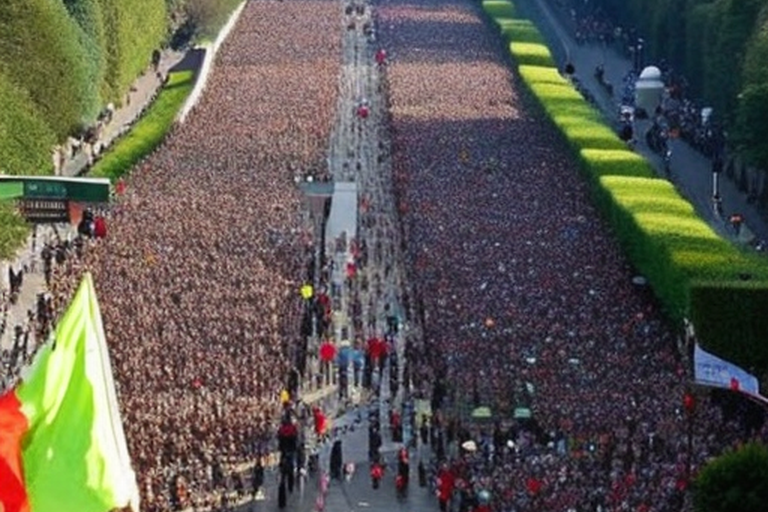
Mass demonstrations continued across France this week, resulting in nearly 1,000 arrests after protestors clashed with police forces during widespread civil unrest. The unrest, fueled by deep-seated political and social dissatisfaction, marks a high level of civil tension that is now echoing across multiple European nations.
Thousands of people gathered in the streets of major French cities, escalating confrontations into significant clashes that required heavy police presence. Authorities reported that the violence was concentrated in several key areas, underscoring a deep rift between segments of the population and the government.
The protests are rooted in a complex mix of economic grievances, dissatisfaction with the ruling political establishment, and concerns over the cost of living. Demonstrators have been voicing frustration over perceived governmental neglect and the pace of social change, prompting a powerful display of popular discontent.
However, the unrest is not isolated to France. Similar protest movements and signs of civil volatility have been observed in countries ranging from Germany to Italy, suggesting that the current unrest is part of a broader, continent-wide questioning of established political and social norms.
Political analysts suggest that the scale of the protests points to systemic issues rather than single-issue flashpoints. “What we are witnessing is not merely a protest against a policy, but a rejection of the political consensus itself,” said Dr. Eleanor Vance, a European Union specialist at Georgetown University. “The common thread is a feeling of being left behind by rapid economic and social changes.”
While French authorities have implemented curfews and increased police mobilization to restore order, the underlying political dissatisfaction remains potent. The clashes underscore the difficulty governments face in addressing the perceived widening gap between economic elites and the working class.
Local activists maintain that the demonstrations are a necessary vehicle for demanding systemic reform. “The streets are the only place where the government must listen to us,” stated Jean-Pierre Dubois, a protest organizer in Paris. “These clashes are a loud, visible demand for real change, not just promises.”
As the protests continue to spread, experts warn that the volatility could destabilize regional economies and strain diplomatic relations. The current environment suggests that European nations face a period of heightened social scrutiny, forcing governments to address fundamental issues of social equity and political representation to prevent further escalation.