
Ethiopia Warns War Over Eritrean Troop Incursion
Tensions have peaked after reports of Eritrean soldiers crossing the border. Ethiopia has warned it will defend itself, escalating the risk of conflict.
Blog Feature 2824521107
**Tensions Flare Between Ethiopia and Eritrea Following Cross-Border Troop Movements**
Ethiopia has warned that it will defend itself militarily if Eritrean troops continue crossing into its territory, following reports of large-scale military movements along their disputed border. The escalation comes after Ethiopian forces reportedly conducted drone strikes in response to the incursion, raising fears of a major regional conflict.
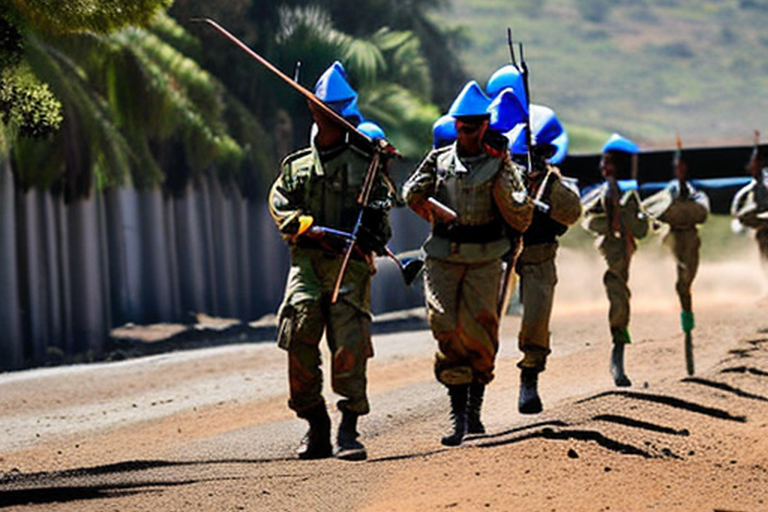
The flare-up centers on increased military activity observed near the border regions, a flashpoint that has seen periods of intense conflict and relative calm. Reports indicate that truckloads of Eritrean soldiers have been spotted crossing into Ethiopian territory, prompting Addis Ababa to issue a formal warning.
Ethiopian officials stressed that the military actions constitute a direct threat to national security, citing a lack of de-escalation efforts from Asmara. The heightened tension immediately puts a fragile regional peace at risk, drawing the attention of international observers and regional powers.
The dispute over the border has a deep historical root, tracing back to the Ethiopian-Eritrean War of 1998–2000. While a peace agreement was signed in 2018, the volatile nature of the border region suggests that underlying tensions remain unresolved.
Diplomatic analysts warn that the current military posturing increases the risk of miscalculation. “The use of force, even in self-defense, raises the stakes dramatically,” stated Dr. Alistair Khan, a regional security analyst. “The possibility of a misread maneuver could quickly turn a border dispute into a large-scale conflict.”
Ethiopia’s response has included reported drone strikes, signaling a shift toward aggressive defensive measures. Meanwhile, Eritrea, which has maintained a policy of limited international engagement, has reportedly increased troop visibility near the border checkpoints.
International bodies, including the African Union, have called for an immediate de-escalation and a return to diplomatic dialogue. However, the urgency of the military build-up appears to be overriding diplomatic efforts on the ground.
“The immediate priority must be establishing a verifiable buffer zone and allowing both nations to communicate through neutral third parties,” advised a representative from the World Bank’s governance unit, speaking on condition of anonymity.
As the situation remains fluid, the international community is closely monitoring whether the involved nations will honor their commitments to restraint or if the military escalation will continue to spiral. The potential for a return to open conflict casts a long shadow over the Horn of Africa’s stability.